


As an Amazon Associate, PuppyVsCat earns from qualifying purchases.
This article contains affiliate links. If you buy through them, we may earn a small commission at no extra cost to you — it helps us keep creating free guides. 🐾
Those needle-sharp puppy teeth! If your hands, ankles, and trouser legs are covered in tiny bite marks, you’re not alone — puppy biting is one of the most common (and most normal) challenges new dog owners face. The good news: with a few consistent techniques, you can teach your puppy to be gentle and channel all that mouthy energy somewhere better. Here’s exactly how to stop a puppy from biting, step by step.
Table of contents
- Why puppies bite
- 5 proven ways to stop puppy biting
- The secret most people miss: mental stimulation
- What NOT to do
- How long does it take?
- Frequently asked questions
Why puppies bite
Before you can fix it, it helps to know why it happens. Puppies bite for completely normal reasons:
- Teething — between 3 and 6 months, sore gums make puppies want to chew everything.
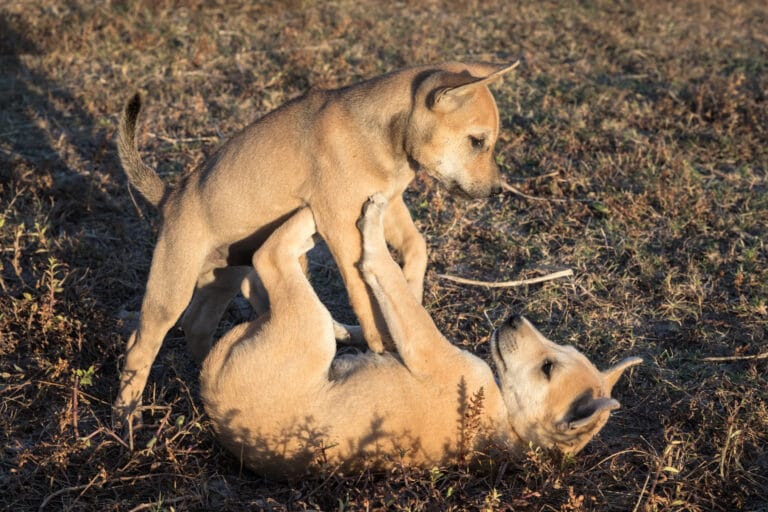
- Play & exploration — puppies explore the world with their mouths, just like babies.
- Learning bite inhibition — in the litter, puppies learn how hard is “too hard” from their siblings. Now it’s your job to continue that lesson.
- Over-tiredness or boredom — an under-stimulated or over-tired puppy gets “bitey,” much like an overtired toddler gets cranky.
So biting isn’t aggression — it’s a puppy being a puppy. Your goal isn’t to punish it, but to teach gentleness and redirect the urge.
5 proven ways to stop puppy biting
1. Yelp and pause
When your puppy bites too hard, give a high-pitched “ouch!” and immediately stop playing. Freeze, withdraw your attention for a few seconds, then calmly resume. This mimics how littermates react and teaches your puppy that hard bites end the fun.
2. Redirect to a chew toy
Always have a toy within reach. The moment teeth touch skin, swap your hand for a toy. A frozen puppy teething toy is especially soothing for sore gums. This teaches “bite this, not me.”
3. Use short time-outs
If your puppy keeps biting even after redirecting, calmly end the session: get up and leave, or pop them in their playpen for 30–60 seconds. No drama, no scolding — just a brief, boring consequence. They quickly learn that biting = playtime stops.
4. Reward gentle behavior
Catch them being good! When your puppy licks or plays without biting, praise warmly and reward. Positive reinforcement is far more effective (and kinder) than punishment.
5. Tire them out — body AND brain
A tired puppy is a gentle puppy. Daily exercise helps, but physical tiredness alone isn’t enough — which brings us to the technique most owners overlook…
The secret most people miss: mental stimulation 🧠
Here’s what surprises most new owners: a lot of “bad” puppy behavior — biting, chewing, zoomies — comes from a bored, under-stimulated mind, not a bad dog. Puppies have busy brains that need a job. Ten minutes of mental work can tire a puppy out more than an hour of running.
That’s exactly why so many trainers now focus on brain games. A program we genuinely like is Brain Training for Dogs — a course of 21 fun games (created by a professional trainer) designed to boost your dog’s intelligence and obedience while burning off the mental energy that fuels biting. It’s an easy, force-free way to give your puppy’s brain the workout it’s craving — and a calmer, gentler puppy is usually the result.
You can also start at home today with a simple puzzle toy or a snuffle mat to keep that clever little mind busy.
What NOT to do
- Don’t hit, smack the nose, or hold the mouth shut. It damages trust, can increase fear-based biting, and doesn’t teach gentleness.
- Don’t play rough with your hands. Wrestling with bare hands teaches that hands are toys.
- Don’t yell or punish harshly — an over-aroused puppy bites more, not less.
- Don’t give up consistency. If biting works sometimes, your puppy will keep trying it.
How long does it take?
With consistent practice from everyone in the household, most puppies show big improvement within 2–4 weeks, and biting usually fades as adult teeth come in (around 6–7 months). If your puppy’s biting seems genuinely aggressive (stiff body, growling, hard bites that break skin), check in with a vet or a certified positive-reinforcement trainer.
For more on raising a happy, well-behaved dog at every stage, explore our dog care and training guides. If bedtime is also a challenge, read our guide to managing barking at night.
Frequently asked questions
At what age do puppies stop biting?
Most puppies naturally bite less once their adult teeth come in, around 6 to 7 months. With consistent training, you’ll usually see major improvement well before that — often within a few weeks.
Why does my puppy bite me but not my partner?
Puppies often bite the person who reacts the most (squealing, fast movements, rough play) or who is less consistent with the rules. Make sure everyone uses the same calm, consistent response.
Is it normal for a puppy to bite a lot?
Yes. Mouthing and biting are completely normal puppy behaviors linked to teething, play, and exploration — not aggression. The goal is to teach bite inhibition and redirect to toys, not to stop a puppy from using its mouth entirely.
Do brain games really help with biting?
Often, yes. A lot of biting comes from boredom and excess mental energy. Mental stimulation — puzzle toys, training games, or a structured program like Brain Training for Dogs — tires the mind and frequently reduces nipping, chewing, and other “bored puppy” behaviors.
Gentle teeth, happy puppy 🐾
Puppy biting is a phase, not a personality. Stay calm, stay consistent, redirect to toys, reward gentleness, and keep that clever brain busy — and your needle-toothed bundle will grow into a gentle, well-mannered companion.
Want a calmer, smarter puppy faster? Try the Brain Training for Dogs games — force-free and fun.